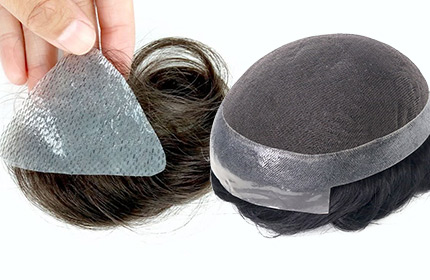
Do You Need a Hair Patch or a Toupee? Choose Based on Your Hair Loss Pattern
When people start looking into non-surgical hair replacement, one of the first things they run into is the whole hair patch vs. toupee question.
And to be fair, the wording can get confusing fast.
A lot of people assume they need to figure out the “correct” term before they can make the right choice. In reality, that’s usually not the part that matters most. What matters is where your hair is thinning and how much of the top actually needs coverage.
That’s the real starting point.
If the loss is limited to one smaller area, a patch is often all you need. Once the thinning starts spreading across more of the top, a toupee usually becomes the better option. So instead of getting hung up on the label, it helps to look at the pattern first.
When a hair patch tends to make more sense
A hair patch is usually the better fit when the hair loss is still fairly specific and contained.
That might mean thinning at the crown, recession at the temples, a weaker front hairline, or one small area that has become noticeably sparse. In those cases, a full top piece can be more than you actually need.
That’s part of why patches appeal to a lot of people. They let you fix the area that bothers you without changing everything else. When there’s still enough natural hair around the thinning area, the result can feel very seamless because you’re working with your existing hair instead of replacing the whole top.
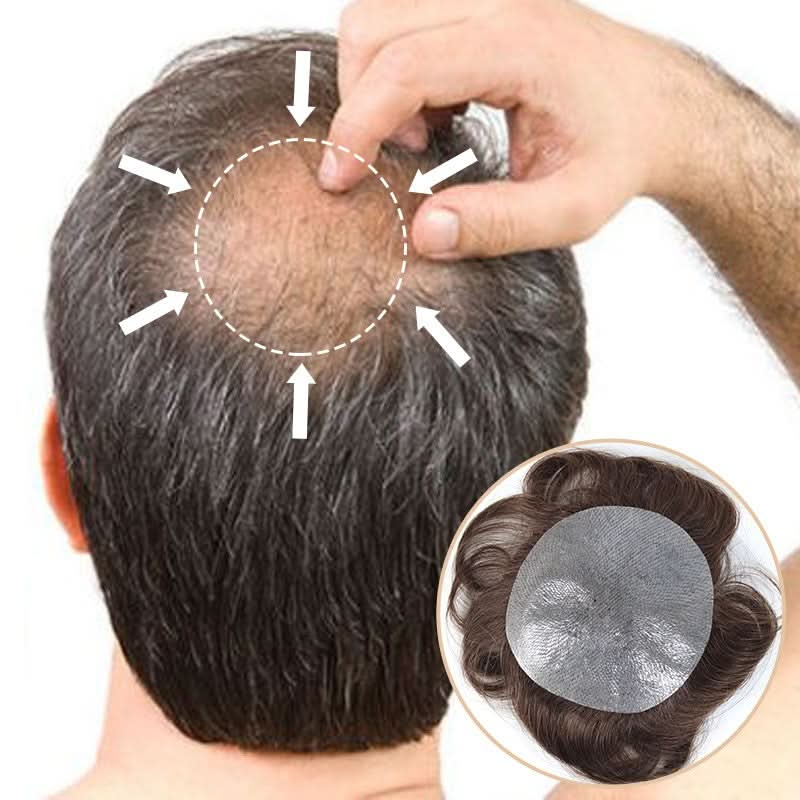
Crown thinning is one of the clearest examples
This is probably one of the most common cases where a patch makes sense.
If the thinning is mainly at the crown and the surrounding hair still looks reasonably full, there’s often no real need to jump straight to a larger system. A crown patch can fill in that one area and blend into the hair around it without affecting the rest of your look.
For someone whose front hairline still looks fine and whose density is mostly good outside the crown, a smaller fix often feels more practical.
Temple recession is another case where smaller coverage can work well
Temple loss changes the shape of the hairline, but it doesn’t always mean the whole top needs help.
When the recession is mostly at the corners, a temple patch is often enough to restore that area without adding unnecessary coverage elsewhere. That’s especially true when the top and mid-scalp still have decent density.
In other words, if the problem is mostly around the edges, it often makes more sense to correct the edges than to cover the whole top.
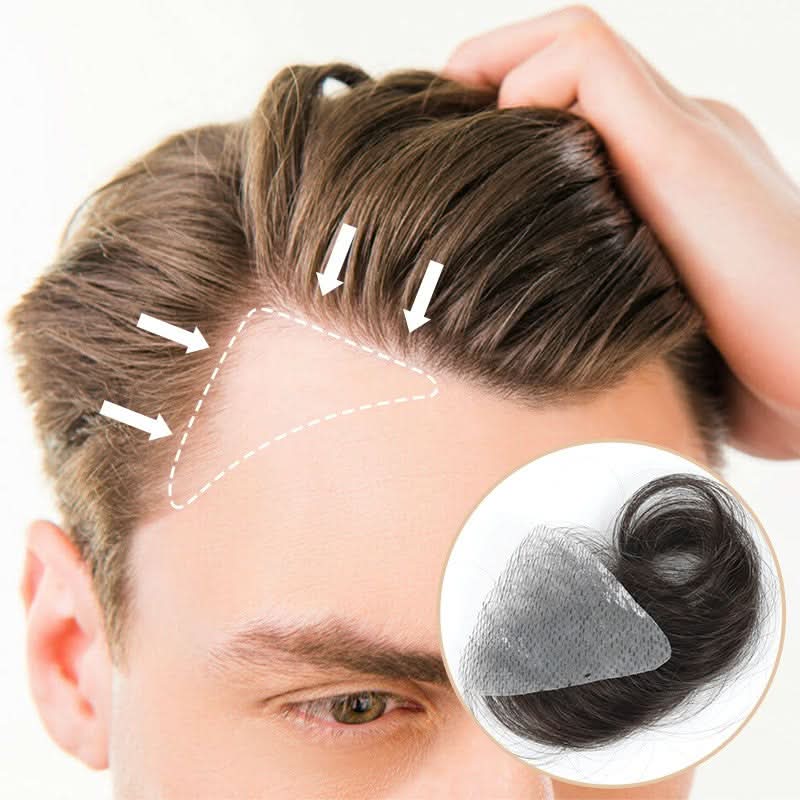
Sometimes the real concern is just the front hairline
Not everyone looking into hair replacement is trying to add density everywhere. For some people, the biggest issue is simply the front.
Maybe the hairline has crept back. Maybe it looks uneven. Maybe the rest of the hair still looks fine, but the front doesn’t frame the face the way it used to.
That’s where a smaller hairline piece can be a very smart option. It lets you rebuild the front edge without committing to more coverage than you actually need.
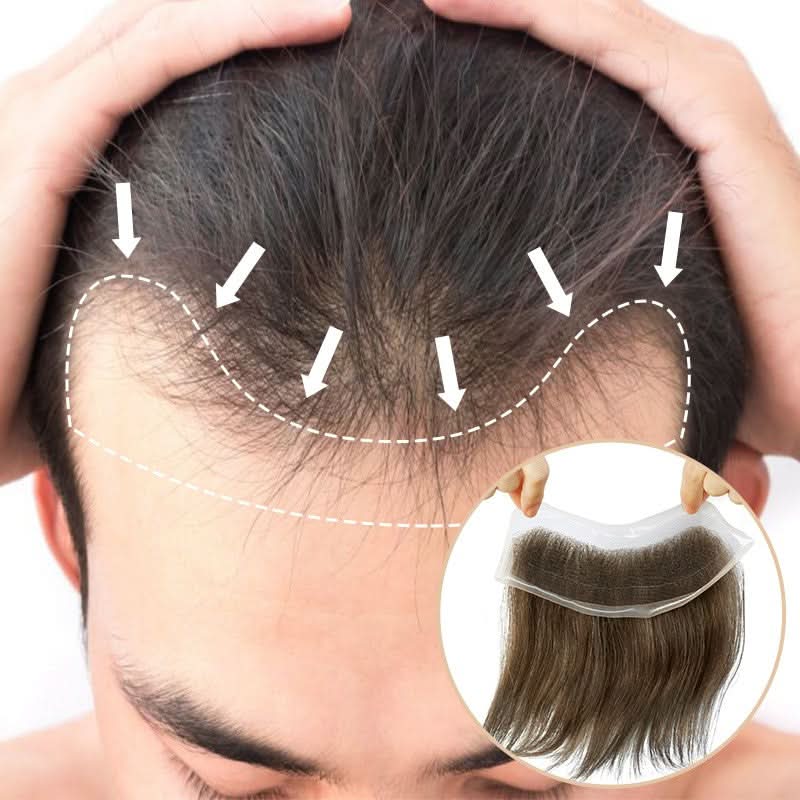
When a toupee starts to make more sense
There’s usually a point where a smaller patch stops being the practical solution.
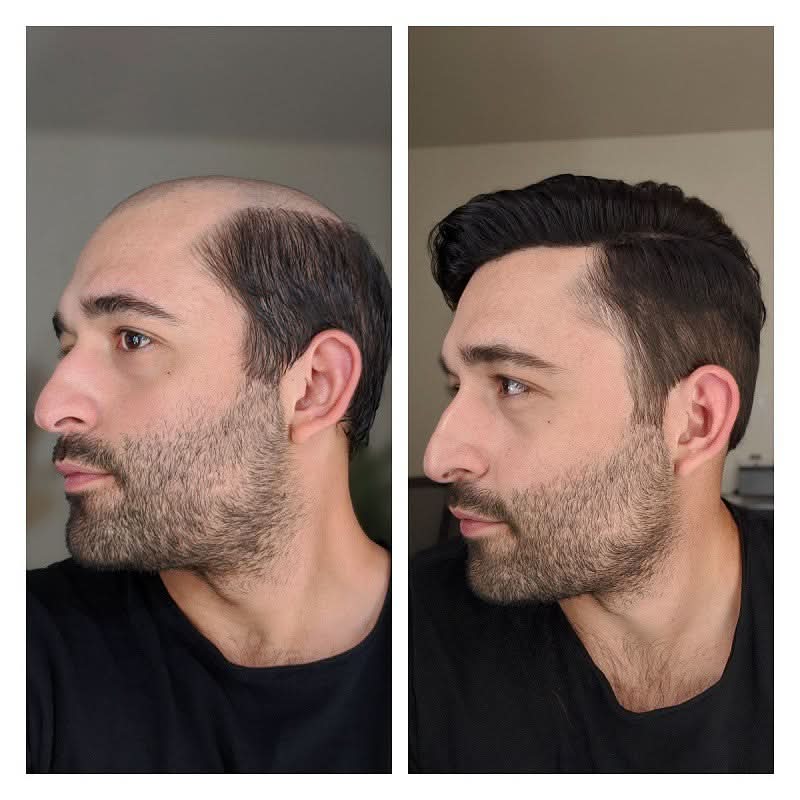
Once the thinning stretches across the front, middle, and crown, or once the top just looks thin overall, broader coverage tends to work better. At that stage, trying to fix separate areas one by one can become harder to blend and less cohesive visually.
That’s where a toupee usually comes in. It covers more of the top in one piece, which often makes the end result look more even and intentional.
For broader thinning, that kind of consistency can matter a lot.
How to tell which one you need
If you’re not sure which option makes more sense, start with your hair loss pattern. In most cases, a hair patch works better for smaller, localized areas, while a toupee is usually the better fit for broader thinning across the top.
| Option | Usually a Better Fit When… |
|---|---|
| Hair Patch | Hair loss is limited to one area, such as the crown, temples, or front hairline. There is still enough surrounding hair for blending, and a smaller, more targeted fix is enough. |
| Toupee | Thinning affects a larger part of the top, stretches from the front to the crown, or makes the top look thin overall. A broader piece is needed for a fuller, more balanced result. |
At the end of the day, that’s really what it comes back to: how much area are you trying to cover, and how much of your own hair is still there to work with?
Final thoughts
If your hair loss is mostly limited to the crown, temples, or front hairline, a patch is often enough to do the job well. If the thinning has become more spread out across the top, a toupee usually gives better overall coverage and a more balanced result.
So the best choice is not really about which term sounds better. It’s about choosing the option that matches your hair loss pattern and gives you a result that looks natural on you.
If you’d like to compare real examples, you can explore different hair patch and toupee options on the Lavivid hair and see which type feels like the right fit.